 By Hodaka Hashi
Learning how to tune a guitar is one of the most fundamental skills every guitarist needs to master. Proper tuning ensures that your guitar sounds its best and that you play in harmony with other instruments. In this guide, we’ll walk through several methods of tuning your guitar, including tuning without an electronic tuner, using alternative tunings, and exploring the benefits of electronic tuners.
Standard E tuning: the foundation for guitar playing
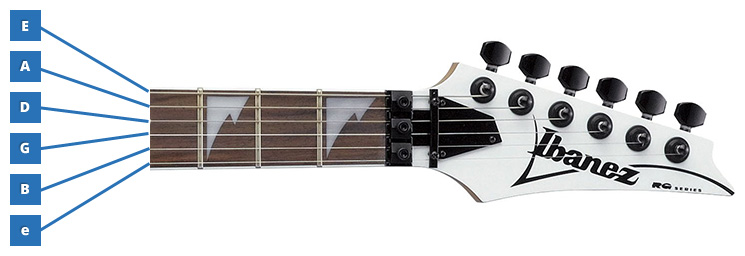
Before diving into tuning methods, it’s essential to understand standard E tuning, which is the most common tuning for a six-string guitar. Each string is tuned to a specific pitch, starting from the lowest string (the thickest) to the highest string (the thinnest). In standard tuning, the strings should be tuned as follows:
- 6th String: E (Lowest)
- 5th String: A
- 4th String: D
- 3rd String: G
- 2nd String: B
- 1st String: e (Highest)
This tuning is often referred to as EADGBE, and it’s the default tuning for most guitar players.
Tuning a guitar without an electronic tuner
While electronic tuners are incredibly convenient, it’s important to learn how to tune your guitar by ear as well. This skill comes in handy when you don’t have a tuner available or when you’re developing your ear for music. Here’s a step-by-step method for tuning your guitar without using an electronic tuner, assuming you have at least one string already in tune (usually the low E string).
Step 1: Tuning the low E string
If you don’t have a tuner handy, you can tune the low E string using a reference pitch from another instrument, such as a piano, tuning fork, or even a tuning app on your phone. Once the low E string is tuned, you can tune the rest of the strings relative to this one.
Step 2: Tuning the other strings
Once your low E string is in tune, use the following method to tune the other strings by ear:
- Tune the A string: Play the 5th fret of the low E string (which is an A note) and tune the open 5th string (A string) to match this pitch.
- Tune the D string: Now, play the 5th fret of the A string (which is a D note) and tune the open 4th string (D string) to this note.
- Tune the G string: Play the 5th fret of the D string (which is a G note) and tune the open 3rd string (G string) to match.
- Tune the B string: Play the 4th fret of the G string (which is a B note) and tune the open 2nd string (B string) to match this note.
- Tune the high e string: Finally, play the 5th fret of the B string (which is an E note) and tune the open 1st string (high e string) to match.
This method is called relative tuning because each string is tuned relative to the one before it. It may not be as precise as an electronic tuner, but it’s a valuable skill for ear training and can be quite accurate with practice.
Pro tip 💡
If your ear is not yet fully trained, try to minimize background noise while tuning by ear to help you focus on the pitch differences between the strings.
Using an electronic tuner
Electronic tuners are a popular choice for guitarists of all levels because of their simplicity and accuracy. These devices are designed to measure the pitch of each string and indicate whether the string is too sharp (higher in pitch) or too flat (lower in pitch). Here’s how to use an electronic tuner effectively:
- Connect the guitar (if applicable): Some tuners require you to plug your guitar directly into the tuner using a cable. Others have built-in microphones to pick up the sound of your guitar when played acoustically.
- Play each string: Pluck a string and observe the tuner. It will show you the note that the string is closest to (e.g., E, A, D, G, B, e) and indicate whether the string is sharp or flat.
- Adjust the tuning pegs: If the string is flat, tighten the tuning peg to raise the pitch. If it’s sharp, loosen the peg to lower the pitch. Continue adjusting until the tuner indicates that the string is in tune.
Common issues ⚠️
Some tuners may fluctuate, especially if the guitar is not properly intonated or if there is ambient noise. Make sure to tune in a quiet environment and ensure your strings are in good condition.
Pro tip 💡
Consider using our online guitar tuner if you don’t have a physical tuner.
Alternative tunings for guitar
While standard E tuning is the most common, many guitarists experiment with alternative tunings to achieve different sounds. One of the most popular alternative tunings is Drop D tuning.
Drop D tuning
In Drop D tuning, the low E string is tuned down a whole step to D. This tuning is commonly used in rock, metal, and acoustic guitar styles for its deeper, fuller sound.
Here’s how to tune to Drop D from standard tuning:
- Tune your guitar to standard E tuning.
- Lower the pitch of the low E string until the 7th fret of the low E string matches the open A string. This means your low E string is now a D.
Drop D tuning allows for easier power chords with one finger and creates a richer, heavier sound for lower-pitched songs.
Other popular tunings
- DADGAD: Popular in folk and Celtic music, this tuning produces a droning, open sound that’s great for fingerpicking and alternate chord voicings.
- Open G tuning: Used frequently in blues and slide guitar, this tuning (DGDGBD) allows for easy chord shapes and open, resonant tones.
Experimenting with alternative tunings can open up new creative possibilities for your playing and songwriting.
Electronic guitar tuners: the Snark tuner
Among the many types of electronic tuners, the Snark Guitar Tuner stands out for its convenience and functionality. What makes the Snark tuner unique is its ability to detect vibrations directly from the guitar’s body rather than relying solely on the sound produced. This means you can tune your guitar even in noisy environments, such as during band rehearsals or live performances.
The Snark tuner clips onto your guitar’s headstock and measures the string’s vibrations. This makes tuning quick and accurate, regardless of background noise, which can be a game-changer if you frequently play with others.
Advantages of the Snark tuner
- Works in noisy environments.
- Easy to read display.
- Clips directly to the guitar for hands-free tuning.
- Accurate tuning by measuring vibrations.
No more asking your bandmates to stop playing so you can tune – simply clip on the Snark, and you’re ready to go!
Conclusion: The importance of accurate tuning
Whether you’re a beginner or an experienced player, accurate tuning is essential to producing great music. By learning how to tune by ear, using an electronic tuner, and exploring alternative tunings, you’ll enhance your versatility as a guitarist. An out-of-tune guitar can be frustrating and discouraging, but with the right tuning tools and methods, you’ll always be in perfect pitch.
Remember, consistent practice with tuning will improve your ear and help you better understand the relationship between different pitches. So grab your tuner – or use one of the methods we discussed – and start tuning your guitar like a pro!
- Want to improve your guitar playing?
-

These lessons have been written by me, a guitar enthuthiast. I've written them to the best of my abilities, but I'm no guitar teacher!
If you want award-winning, well structured but inexpensive lessons, I strongly recommend you check out Guitar Tricks. They have great range of video guitar lessons from numerous coaches specialising in a wide range of styles.
I've seen their videos, and they're great. With these guys, I'm confident you'll be improving in no time!